Why Your Facebook Ads Can Have a High CTR and Still Not Convert.
A 3% CTR and $0.24 CPC looked like a win. GA4 showed 100+ visitors, 12-second sessions, and zero consultation requests. Here's what the placement report revealed.

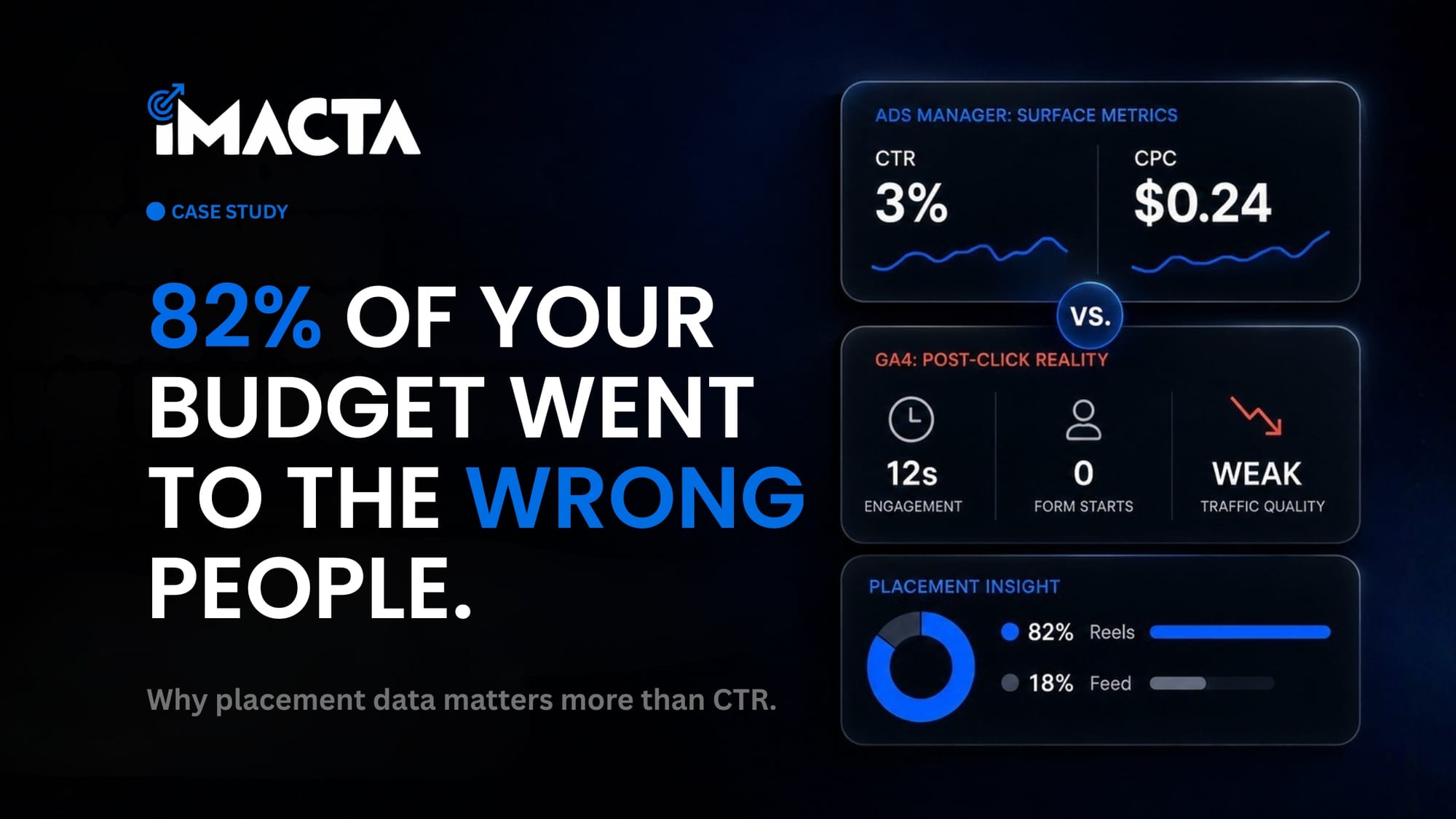
A high click-through rate and a low cost per click can make a Facebook campaign look like it's working. We recently reviewed one with a CTR (click-through rate) above 3% and a CPC (cost per click) of $0.24. Most advertisers would have scaled it.
We asked a different question first.
Common Question
Why do Facebook ads get clicks but no consultation requests?
The most common cause is placement mismatch. Meta's automatic placements often push delivery to Instagram Reels, where users are in entertainment mode, not buying mode. The result is a low CPC and high CTR with no post-click intent.
The Real Problem Appeared After the Click
Facebook Ads Manager showed us the click. GA4(Google's free website analytics tool) showed us what those visitors did next:
📊 100+ landing-page visitors
⏱ 12 seconds average engagement time
🚫 Zero consultation requests
That changes the diagnosis entirely.
When more than 100 people reach a page with a free consultation offer and not one of them starts the form, the natural reaction is to blame the page. Rewrite the copy. Redesign the layout. Change the offer.
That would have been the wrong move.
The Placement Report Revealed the Real Problem
Before touching the landing page, we looked at where Meta had actually delivered the campaign.
82% of spend had gone to Instagram Reels. Facebook Feed, the placement most relevant to the target audience, received almost no meaningful delivery.
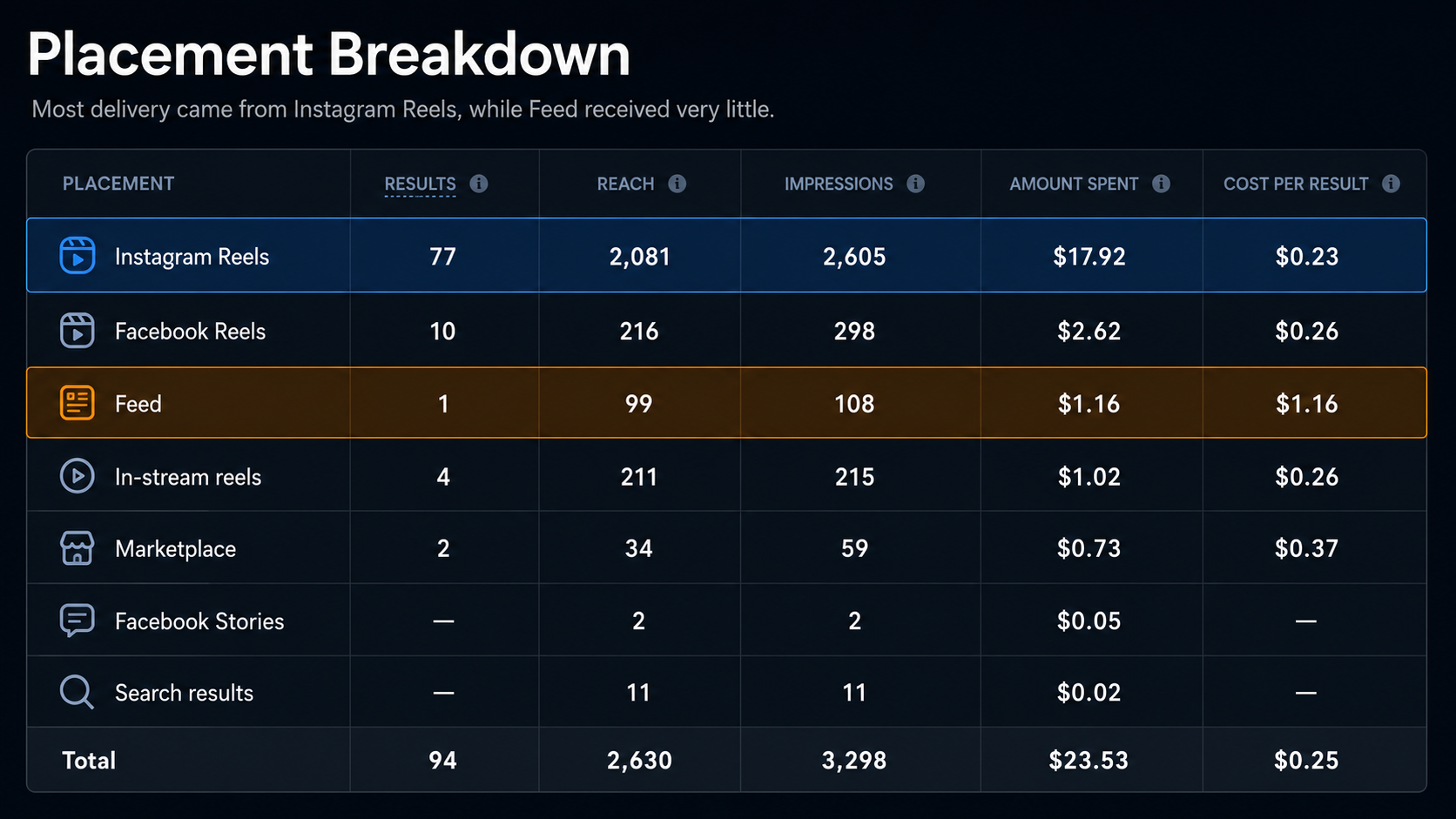
Once you see that, the 12-second sessions make complete sense.
Instagram Reels users are moving fast. They are not evaluating service providers. They may tap an ad with no conscious intention of following through. Meta found the cheapest inventory available, generated a low CPC and a high CTR, and called it efficiency.
The campaign was not attracting qualified interest. It was purchasing inexpensive attention from people who were never going to book a call.
Cheap Traffic Is Not the Same as the Right Traffic
CTR measures whether people clicked. CPC measures what you paid per click. Neither tells you whether those people had any real intention of becoming a customer.
The behavior after the click is the only honest signal.
A $0.24 click from someone who leaves in 12 seconds and never returns is not a cheap result. It is a wasted result. Scaling that campaign would have meant purchasing more of the same.
The Fix Was Simple: Fewer Clicks, More Consultation Requests.
We replaced Advantage+ placements (Meta's automatic placement system) with Manual Placements and restricted delivery to Facebook Feed. We also disabled the option that allows limited spend in excluded placements, which is easy to overlook and quietly drains budget back to low-intent inventory.
CPC increased. Traffic volume dropped.
Consultation requests came in.
That is the correct trade. A visitor who reads the page, evaluates the offer, and books a call is worth significantly more than several visitors who leave before the page finishes loading. Optimizing for the cheapest click is not the same as optimizing for the right outcome.
Before Changing Your Ad, Diagnose Your Traffic
Most campaigns that appear to be underperforming are not suffering from a messaging problem.
They are suffering from a diagnosis problem.
Before rewriting your ad, changing your offer, or rebuilding your landing page, pull the placement breakdown alongside your post-click data. Check engagement time. Check where your budget actually went. Check whether Meta was finding buyers or finding the path of least resistance.
CTR and CPC are useful signals. They are not the full picture.
The question that matters is not "how much did the click cost."
It is "who clicked, and what did they do next."
Key Takeaways
✓ CTR and CPC measure traffic efficiency, not traffic quality.
✓ 82% delivery to Instagram Reels produced clicks from users with no buying intent.
✓ Restricting to Facebook Feed raised CPC but generated actual consultation requests.
Una comparación ordenada puede empezar por el corte, la transpiración del tejido y las instrucciones de cuidado. Una referencia como equipacion de Cristiano Ronaldo puede servir para revisar opciones generales sin depender de una sola característica. La decisión final resulta más clara cuando se comparan datos concretos y no solo la apariencia general.
✓ Always check placement data before changing your ad or landing page.